
What Can Go in a Dumpster (and What Can’t)
Most of what you’re clearing out is fine. A short list of things aren’t — and finding that out when the driver refuses the load is the expensive way to learn it. Here’s the whole list up front.
- We sort and divert
- Nothing dumped illegally
- Straight answers before you book
- Open 8 AM–6 PM, 7 days
Yes — Load It Up
The overwhelming majority of what comes out of a house, a jobsite, or a yard goes straight in:
- Furniture of any kind
- Mattresses and box springs
- Household junk and clutter
- Clothing and textiles
- Carpet, padding, and flooring
- Drywall and lumber
- Cabinetry and countertops
- Roofing shingles
- Fencing and decking
- Yard waste, brush, and branches
- Tree limbs and stumps
- Non-refrigerant appliances
- Toys, sporting goods, bikes
- Cardboard and packing material
- Scrap metal
- Construction and demo debris
No — These Can’t Go In
These are prohibited at the disposal facility, not by us. Landfills won’t accept them mixed into a general load, and putting them in means the whole load can be rejected.
Paint, solvents, and chemicals
Liquid paint, stains, thinners, pesticides, pool chemicals, motor oil, antifreeze. Fully dried-out latex paint cans are usually acceptable — wet ones never are.
Batteries
Car batteries, lithium-ion packs, and rechargeables. Lithium batteries are a genuine fire risk in a packed load and in the truck.
Anything with refrigerant
Refrigerators, freezers, window AC units, dehumidifiers. Federal law requires certified recovery first. We handle these separately — see appliance removal.
Tires
Prohibited in general loads statewide. They require separate processing. We can take them, but tell us in advance so we route them correctly.
Asbestos-containing material
Old floor tile, pipe wrap, some siding and popcorn ceilings in pre-1980 homes. This requires licensed abatement and documented disposal. Do not put it in a bin — call us and we’ll point you to the right process.
Propane tanks and pressurized cylinders
Grill tanks, camping canisters, old fire extinguishers, helium tanks. They explode under compaction. Empty or not, they stay out.
Medical and biohazard waste
Sharps, prescription medications, and anything contaminated. These have their own disposal channels for good reason.
Ammunition, explosives, flares
Including old road flares in a garage. Contact the Flagstaff Police Department for safe disposal of ammunition.
Contaminated soil and fuel
Gasoline, diesel, and any soil they’ve soaked into. Requires specialized handling.
Where to take the prohibited stuff in Flagstaff. The City of Flagstaff operates a Hazardous Products Center that accepts household hazardous materials — paint, chemicals, batteries, and similar — from area residents. Check their current hours and eligibility before you load up the truck. If you’re unsure whether something in your pile qualifies, call us first. We’d rather spend two minutes on the phone than have you find out at the curb.
The Gray Areas
Electronics and TVs
Generally acceptable, but they’re better recycled than landfilled and there may be a small handling charge on CRT televisions. Tell us what you’ve got.
Concrete, dirt, and brick
Allowed, but they’re heavy enough to change the price. A bin can hit its weight limit while looking half empty. Flag it when you book so we quote it right.
Treated and painted lumber
Usually fine in a mixed load. Large volumes of pressure-treated wood can require separate routing.
Fluorescent tubes and CFLs
They contain mercury and belong at the Hazardous Products Center, not in the bin. A few mixed in isn’t a crisis — a box of forty is.
How to Load It Right
- Heavy and flat on the bottomLumber, drywall, and flat panels first. Build a stable base and you’ll fit noticeably more in.
- Break things downFurniture that gets disassembled takes a fraction of the space. Same with boxes — flatten them.
- Fill the gapsBags of small debris go into the voids around bulky items rather than on top of them.
- Keep it level with the top railDebris can’t be heaped above the rail — it isn’t legal or safe to transport that way. If you’re close to full, call for a swap rather than piling higher.
What Happens to It After We Haul It
We don’t just run everything to the landfill. Usable furniture and household goods get routed to local donation partners. Metal, cardboard, and electronics go to recycling. Green waste gets diverted where it can be. What’s genuinely waste goes to proper disposal, documented. More on how we sort at our waste diversion hub.
Serving Northern Arizona
Dumpster delivery and junk removal in Flagstaff, Sedona, Village of Oak Creek, Williams, Doney Park, Parks, Kachina Village, Bellemont, and Munds Park. See all areas we serve.
Questions People Ask
Can I put a mattress in the dumpster?
Yes. Mattresses and box springs are fine in our bins. They’re bulky, so if you have several, factor that into your size choice — see our size guide.
Can I throw away paint?
Not wet paint. Fully dried-out latex paint cans are generally acceptable — you can dry small amounts with cat litter or a hardening additive. Liquid paint of any kind, oil-based paint, stains, and solvents need to go to the City’s Hazardous Products Center instead.
What happens if I put something prohibited in by accident?
Call us before pickup and we’ll sort it out — usually we just pull the item and route it properly. The problem is only when we find out at the disposal facility, because a contaminated load can be rejected entirely and that cost lands on the rental. A quick heads-up costs you nothing.
Can I put a refrigerator or freezer in?
No. Anything containing refrigerant requires certified recovery under federal EPA rules before disposal. We remove those separately and there’s no freon surcharge — see refrigerator and appliance removal. If you have one on a dumpster job, just tell us and we’ll grab it at delivery or pickup.
Can I put concrete, dirt, or rock in?
Yes, but tell us first. Heavy material is priced differently because disposal facilities charge by the ton. A bin full of concrete weighs several times what the same volume of household debris does.
Do you take tires?
Yes, but not mixed into a general load — they need separate processing. Let us know how many when you book and we’ll handle the routing.
I think there’s asbestos in my old flooring. What do I do?
Stop and don’t disturb it. Pre-1980 homes in Flagstaff commonly have asbestos in floor tile, pipe wrap, and some ceilings. It needs licensed testing and abatement with documented disposal — it can’t go in any dumpster. Call us and we’ll tell you honestly what’s involved and who to talk to.
What Can Go in a Dumpster vs. What Needs Special Disposal
Most household junk, furniture and construction debris can go in a dumpster. Paint, chemicals, tires and electronics usually can’t, and Coconino County’s recycling guide lists where those items go instead. When in doubt about what can go in a dumpster, call before you load.


What Can Go in a Dumpster, Category by Category
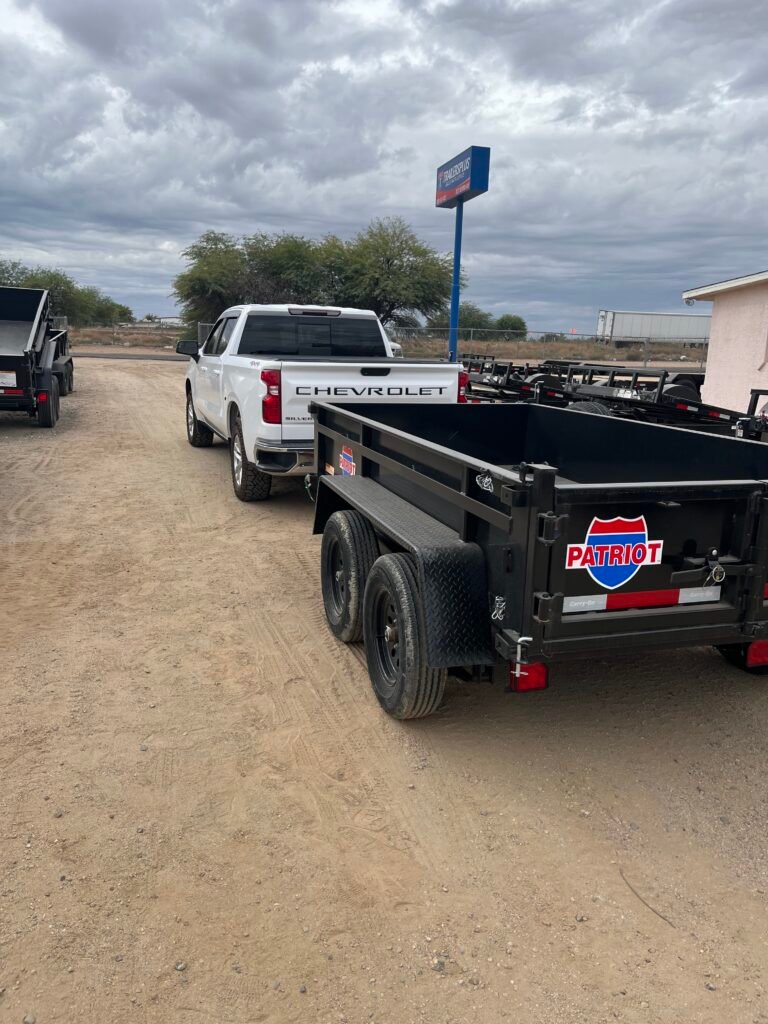
The lists above give you the quick answer to what can go in a dumpster. This section goes a level deeper, because most of the questions we get are about the edges of each category: the half-full can in the garage, the old recliner, the pile of pavers behind the shed. Here’s how each category actually works when you’re loading one of our dump trailers.
Household junk and clutter
This is the bulk of most loads: boxes of old paperwork, kitchenware, décor, holiday decorations, storage bins, broken lamps, rugs, and the general contents of a garage or spare room. All of it can go in. A few things are worth pulling out first:
- Anything usable. Decent furniture, working small appliances, and clean housewares are worth setting aside. They’re easier to donate before they’re buried under drywall.
- Cleaning products and garage chemicals. These hide in cabinets and under sinks. Do a sweep before you start tossing, so a half-full jug of pool chlorine doesn’t end up in the middle of the load.
- Loose batteries. Junk drawers are full of them. Pull them out and bag them separately (more on that below).
Furniture and mattresses
Couches, sectionals, dressers, tables, bed frames, office chairs, bookshelves, and mattresses all go in. What matters with furniture is space, not rules. A sofa loaded whole takes up a surprising amount of room. Take the legs off, pull the cushions, and stand it on end against the wall of the trailer. Dressers load better with the drawers pulled out and stacked inside the frame. Glass tabletops should go in flat on the bottom, or be wrapped, so they don’t shatter onto the rest of the load.
Yard waste
Branches, brush, pine needles, leaves, shrubs, small stumps, and old landscaping timbers are all on the list of what can go in a dumpster. In Flagstaff and the surrounding forest communities, a lot of yard cleanups are really defensible-space work, and that tends to generate a big volume of light, bulky material. Two tips: cut long limbs down to a length that lies flat in the trailer, and keep the soil and rock separate if you can. Dirt and rock are heavy and change how a load is priced, as noted above.
Construction and remodel debris
Drywall, lumber, trim, cabinets, countertops, flooring, carpet and pad, roofing shingles, fencing, decking, doors, windows, and fixtures are all standard. If you’re running a bigger project, our construction dumpster rental page covers sizing and scheduling around project phases. The main thing to watch on remodels is what’s hiding in older materials. If the house was built before 1980, read the asbestos section again before you pull up flooring or scrape ceilings.
Appliances
Washers, dryers, stoves, ovens, dishwashers, water heaters, and microwaves don’t contain refrigerant, so they can go in. Drain washers and water heaters first so you aren’t loading water weight. Anything that keeps things cold is different: refrigerators, freezers, window and portable AC units, dehumidifiers, water coolers, and ice makers all hold refrigerant and need to be handled separately.
What Can’t Go in a Dumpster, and Why
Knowing what can go in a dumpster is half the job. The other half is understanding why the excluded items are excluded, because once you know the reason, the gray areas get easier to judge on your own.
Hazardous household products
Liquid paint, stains, solvents, thinners, pesticides, pool chemicals, motor oil, and antifreeze are flammable, corrosive, or toxic. In a packed load they can leak, mix, or catch fire, and at the disposal site they can contaminate everything around them. The EPA’s guidance on household hazardous waste found during cleanouts and demolition lists these same products and says not to pour them down drains, onto the ground, or into storm sewers. Arizona’s environmental agency explains that local governments, not the state, run collection. ADEQ’s household hazardous waste page says it doesn’t collect these items itself and points residents to city and county programs.
Batteries
Lithium-ion batteries from phones, laptops, power tools, vapes, and e-bikes are the biggest fire risk in any load of junk. When they’re crushed or punctured, they can ignite. The EPA’s page on used lithium-ion batteries says they should never go in household trash or recycling bins. It recommends putting each battery in its own plastic bag or taping over the terminals with electrical tape. Car batteries are lead-acid and also stay out of the bin. Most auto parts stores take them back.
Refrigerant appliances
Fridges, freezers, and AC units hold refrigerant that federal rules don’t allow to be released. The EPA’s appliance disposal rules under Clean Air Act Section 608 make the final disposer responsible for recovering the refrigerant. If someone else recovers it first, they have to provide a signed statement with their name, address, and the date of recovery. That paperwork trail is why these appliances can’t just ride along in a mixed load. We handle them separately.
Tires
Tires don’t compact, they trap water and pests, and they need their own processing. As noted above, we can take them if you tell us in advance. If you’d rather drop them off yourself, ADEQ keeps a county-by-county list of Arizona waste tire collection sites. In Coconino County that includes the county-operated site on East Penstock Avenue in Flagstaff.
Electronics and e-waste
Electronics are a gray area rather than a hard no, as explained above, but recycling is almost always the better route. Circuit boards contain metals worth recovering, and many devices have built-in batteries. The City’s Hazardous Products Center takes many household electronics. Check its list first for TVs and for anything with a built-in lithium battery, since those have their own rules.
Propane tanks and pressurized cylinders
Under compaction or heat, a “mostly empty” tank can still rupture. Small 1-pound camping canisters are a different case from 20-pound grill tanks. The City’s waste chart notes that larger BBQ-size tanks aren’t accepted at the landfill or the Hazardous Products Center. Take those back to a tank exchange or the retailer you bought them from.
Asbestos
Asbestos is only dangerous when it’s disturbed, which is exactly what demolition and loading do. Fibers released from old floor tile, pipe wrap, or popcorn ceilings can be inhaled. That’s why it needs licensed handling and can’t go in any dumpster, ours included.
Where Flagstaff and Coconino County Residents Can Take Excluded Items
The City of Flagstaff publishes a Where to Take Waste chart that is the best single reference for local drop-off options. If something isn’t on the list of what can go in a dumpster, start there. Here’s a summary of what it showed when we checked. Confirm current hours and rules before you go, because they change.
| Item | Where it goes locally |
|---|---|
| Paint, solvents, pesticides, oil, antifreeze, household batteries, fluorescent bulbs | City of Flagstaff Hazardous Products Center, 6770 E. Landfill Rd. Free for City and Coconino County residents with ID. Open limited weekdays. |
| Refrigerators, freezers, AC units | Cinder Lake Landfill (fees may apply), or ask us to remove it separately |
| Tires | Coconino County tire yard. Not accepted at Cinder Lake Landfill or the Hazardous Products Center. |
| Small 1 lb propane canisters | Hazardous Products Center. Larger grill tanks go back to an exchange or retailer. |
| Ammunition | Flagstaff Police Department main lobby |
| Medications and sharps | Not taken at the Hazardous Products Center. Follow ADEQ’s household instructions or use a county drug drop box or a City Drop-off Day. |
| Asbestos | Depends on the type. Some non-friable material is accepted at Cinder Lake Landfill only with prior approval. Friable asbestos is not. |
The Hazardous Products Center also runs a Drop & Swap reuse shop during drop-off hours. If you have usable leftover paint or cleaning products, someone else may be able to use them.
How to Load a Dumpster Safely and Evenly
The loading basics above (heavy and flat first, break things down, fill gaps, stay below the rail) cover the volume side. These tips are about safety and keeping the trailer stable for transport:
- Spread weight front to back. Don’t stack all the heavy material at one end. An even load tows safely. A lopsided one doesn’t.
- Heavy material low, not high. Tile, plaster, and wet debris go on the bottom where they belong.
- Wear gloves and closed-toe boots. Demo debris has nails, broken glass, and sharp metal edges.
- Don’t climb on unstable piles. If you need to push material down, use a tool from the side.
- Keep the area clear. Leave a clean path to the trailer and keep kids and pets away from the loading zone.
- Cover light debris on windy days. Northern Arizona wind will happily move insulation, cardboard, and paper into your neighbor’s yard.
What Happens If Banned Items Are Found
As covered above, the real cost comes when a prohibited item is found at the disposal facility instead of at your house. In practice:
- Before pickup: If you tell us or our driver spots it, the item is pulled and routed properly. Usually that’s the end of it.
- At the facility: A load with hazardous material in it can be rejected outright. Then it has to be sorted, rerouted, or hauled somewhere else, and as the FAQ above explains, that cost lands on the rental.
- Safety issues: Batteries and pressurized tanks can start fires in the truck or at the facility, which is why we take them seriously even when there’s just one.
The easy fix is to walk the pile once before pickup and pull anything that isn’t on the list of what can go in a dumpster.
More Questions About What Can Go in a Dumpster
Can I put dried paint cans in the dumpster?
Fully dried latex paint is generally acceptable, as noted above. Leave the lid off so the driver can see it’s solid. Oil-based paint, stains, and any liquid paint go to the Hazardous Products Center.
Can I throw away a water heater?
Yes. Water heaters don’t contain refrigerant. Drain it completely first so you aren’t paying to haul water.
What about a microwave?
Microwaves don’t contain refrigerant and can go in. The City’s waste chart also lists the Cinder Lake Landfill scrap metal pile as an option if you’re dropping it off yourself.
Can I put a grill in?
The grill body, yes. The propane tank, no. Disconnect it and take it to a tank exchange. Dump out any charcoal and ash and let it cool completely first, because hot coals in a load of debris are a fire waiting to happen.
Can old vapes or e-cigarettes go in the dumpster?
No. They contain lithium-ion batteries. Bag them and take them to a battery collection point, following the EPA’s lithium-ion guidance.
Can I put cleaning supplies in if the bottles are empty?
Truly empty, rinsed household cleaner bottles are generally fine. Anything with product still in it should come out. When in doubt about what can go in a dumpster, treat a partly full container as hazardous.
Do I need to bag household junk?
Not required, but bags of small items fill gaps well and keep light debris from blowing around. Just don’t bag anything from the excluded list to hide it. If it’s found, the load can still be rejected.
Is what can go in a dumpster the same in Sedona and Williams?
The core rules are the same everywhere we serve, because the disposal facilities drive them. Local drop-off sites for hazardous items do differ by community, so check with your city or county for the nearest option.
Still Unsure What Can Go in a Dumpster?
If something in your pile doesn’t fit neatly on either list, describe it to us before you load it. AZ Haul is veteran-owned and locally owned, based in Bellemont with a shop at 2001 E Huntington Dr in Flagstaff, and we serve Flagstaff, Sedona, Williams, the Verde Valley, and nearby communities from 8 AM to 6 PM, seven days a week. Call (928) 600-2035 and we’ll give you a straight answer on what can go in a dumpster and what needs a different route.
Not Sure About Something in Your Pile?
Call and describe it. Two minutes on the phone beats a rejected load. Veteran-owned, serving Northern Arizona seven days a week.
More on rentals: which size do I need · rental cost · contractor accounts